
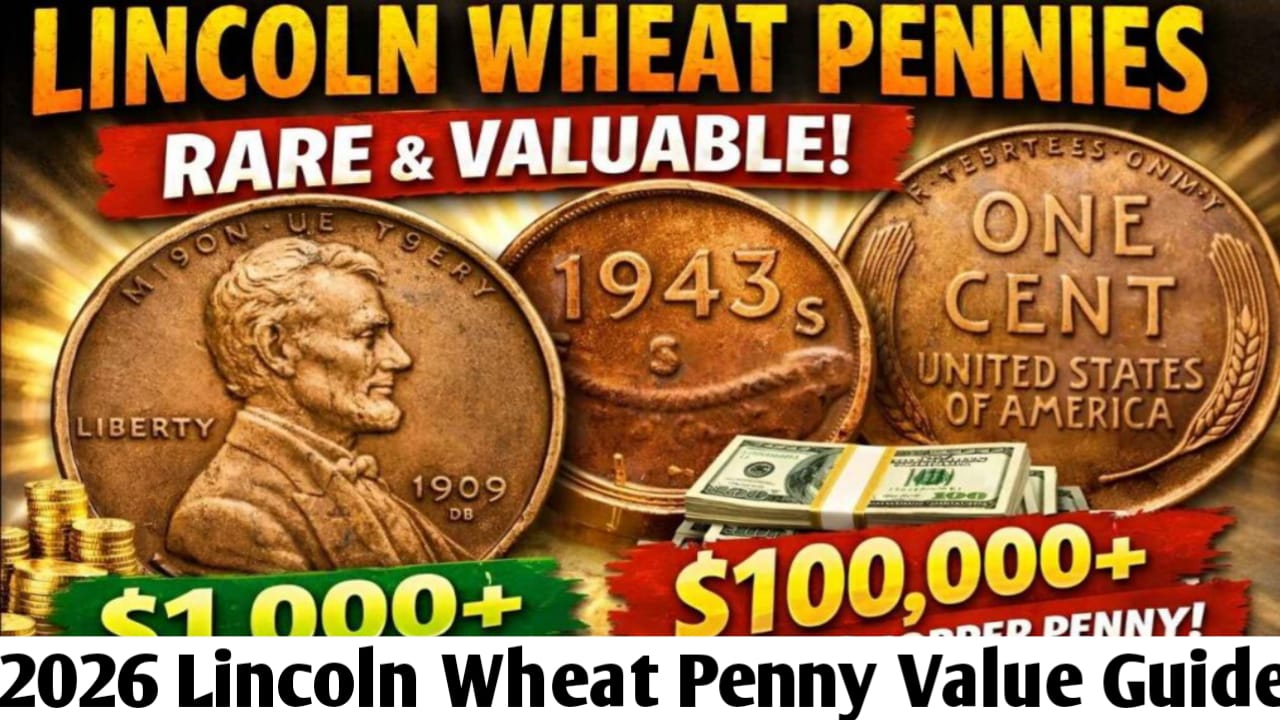
The 2026 Lincoln Wheat Penny value guide is essential for collectors and casual coin holders alike, as interest in historic U.S. coins continues to grow. The Lincoln Wheat Penny was minted from 1909 to 1958, making it one of the longest-running and most collected American coin series. In 2026, values are influenced by factors such as mint year, mint mark, condition, and rare errors. According to current numismatic market data and U.S. Mint historical records, some Wheat Pennies are worth just a few cents, while rare examples can sell for thousands or even hundreds of thousands of dollars. Official grading standards recognized by national coin authorities play a major role in determining accurate values.
2026 Lincoln Wheat Penny Value Guide
Many people discover Wheat Pennies in old collections, inherited jars, or estate sales, often unaware of their potential worth. While most are common, a small percentage are highly valuable due to low mintage, metal composition, or striking errors.
This guide explains which Lincoln Wheat Pennies are valuable in 2026, how to identify them, and what drives current market prices—without unnecessary technical detail.
What Is a Lincoln Wheat Penny?
The Lincoln Wheat Penny was introduced in 1909 to honor the 100th anniversary of Abraham Lincoln’s birth. It features Lincoln’s portrait on the front and two wheat stalks on the reverse, symbolizing prosperity.
These pennies were primarily made of 95% copper, except for a few wartime issues. Their age, history, and variety make them popular among collectors worldwide.
Most Valuable Lincoln Wheat Pennies in 2026
Not all Wheat Pennies are rare, but certain dates and mint marks are especially valuable. Below is a value overview of notable examples collectors search for in 2026.
| Wheat Penny | Estimated Value Range (2026) |
|---|---|
| 1909-S VDB | $700 – $2,500+ |
| 1909-S | $300 – $1,500 |
| 1914-D | $250 – $3,000 |
| 1922 No D | $500 – $12,000 |
| 1931-S | $100 – $1,000 |
| 1943 Bronze | $100,000 – $250,000+ |
| 1944 Steel | $75,000 – $150,000 |
| 1955 Doubled Die | $1,000 – $15,000 |
ALSO READ-
Key Factors That Affect Wheat Penny Value
Several elements determine the Lincoln Wheat Penny value in 2026:
- Mint mark: Coins from San Francisco (S) and Denver (D) are often scarcer
- Condition: Uncirculated coins command much higher prices
Other important factors include strike quality, originality, and collector demand.
Rare Errors That Increase Value
Error coins are among the most valuable Wheat Pennies. Famous examples include doubled dies, off-center strikes, and wrong-metal errors. The 1943 bronze and 1944 steel pennies are especially sought after because they were accidentally struck on incorrect planchets.
Even minor errors can significantly raise value when authenticated and graded.
How Coin Condition Impacts Prices in 2026
Condition is graded on a scale ranging from heavily worn to mint state. A common Wheat Penny in poor condition may be worth only a few cents, while the same coin in mint condition can be worth hundreds.
Professional grading helps establish trust and market value, especially for high-end coins.
Are Wheat Pennies Still Worth Collecting?
Yes. Demand for classic U.S. coins remains strong in 2026. While rare examples attract investors, affordable common dates make Wheat Pennies accessible to beginners.
Collectors appreciate their historical significance, copper content, and long-term value potential.
FAQs About 2026 Lincoln Wheat Penny Values
Q1. Are all Lincoln Wheat Pennies valuable in 2026?
No. Most common dates are worth a few cents, but rare issues can be extremely valuable.
Q2. What is the most valuable Wheat Penny?
The 1943 bronze Wheat Penny is among the most valuable, worth over $100,000.
Q3. How can I tell if my Wheat Penny is rare?
Check the date, mint mark, and condition, and look for known errors.
Conclusion
The 2026 Lincoln Wheat Penny value guide shows that these historic coins remain highly collectible. While most Wheat Pennies are common, certain dates, mint marks, and errors can be worth significant money. Understanding key value factors—such as rarity, condition, and demand—helps collectors make informed decisions. Whether you own one penny or a full collection, Wheat Pennies continue to hold both historical charm and real market value in 2026.