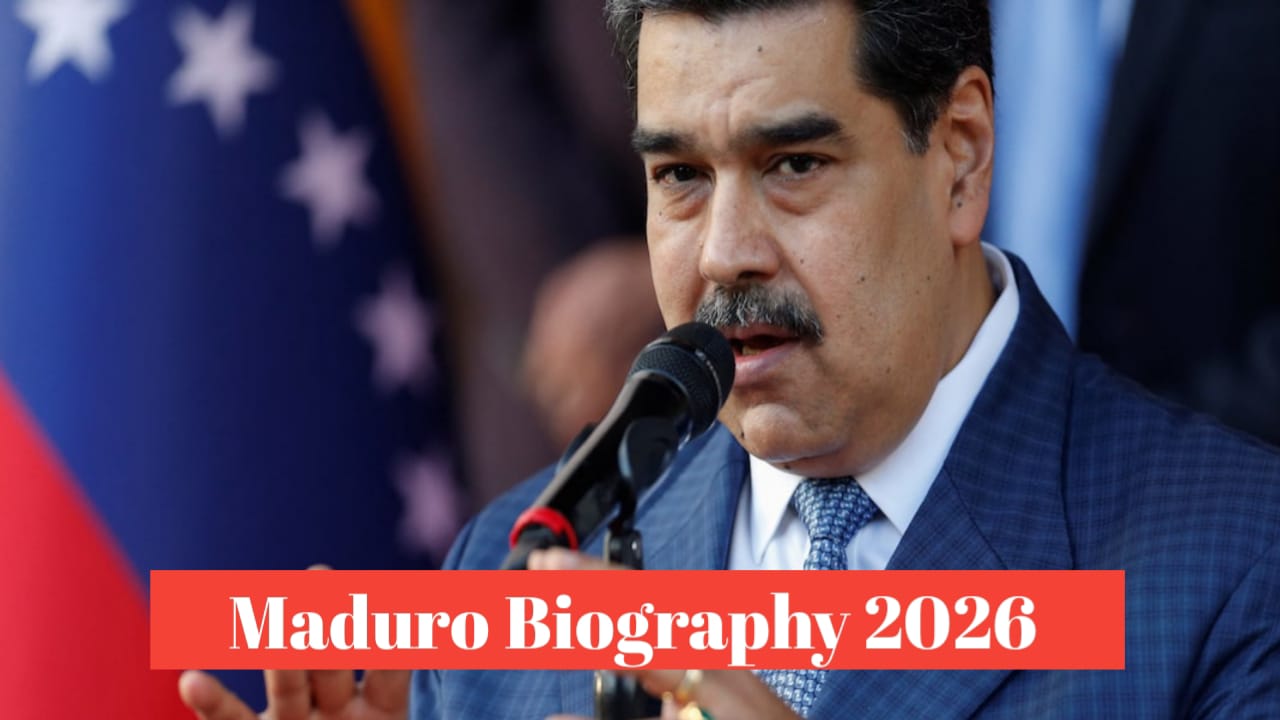
The Maduro Biography 2026 explores the life and political journey of Nicolás Maduro Moros, the long-serving President of Venezuela. Born on November 23, 1962, in Caracas, Maduro rose from a working-class background to become one of the most influential and controversial leaders in Latin America. As of 2026, he continues to hold the presidency of Venezuela, a position he first assumed in March 2013 following the death of Hugo Chávez. Maduro has since won multiple elections amid intense international scrutiny. Official information about his presidency is released through Venezuela’s national government communications and presidential offices. Over more than a decade in power, his leadership has shaped Venezuela’s economy, foreign relations, and internal politics in profound ways.
Maduro Biography 2026
Nicolás Maduro is closely associated with Chavismo, the socialist political movement founded by Hugo Chávez. His presidency has been marked by economic crisis, sanctions, political polarization, and large-scale migration, making him a central figure in global political discussions.
Understanding Maduro’s background, ideology, and governance style is essential to understanding Venezuela’s modern history and its place on the world stage in 2026.
Early Life and Education of Nicolás Maduro
Nicolás Maduro grew up in a modest family in Caracas. Before entering politics, he worked as a bus driver for the Caracas Metro system, an experience that strongly shaped his labor-oriented worldview. He became active in union politics during his early career.
Maduro did not complete a traditional university degree but received political training through socialist movements and later through Cuba-linked political education programs. His early exposure to leftist ideology laid the foundation for his future political rise.
Entry Into Politics and Rise Under Hugo Chávez
Maduro’s political career advanced rapidly after he joined Hugo Chávez’s movement in the 1990s. He became a founding member of the Fifth Republic Movement and later the United Socialist Party of Venezuela.
He served as a National Assembly member, then as Foreign Minister from 2006 to 2013, becoming one of Chávez’s most trusted allies. Shortly before his death, Chávez publicly endorsed Maduro as his successor, a decisive moment in Venezuelan politics.
Key Personal and Political Details (Table)
| Category | Details |
|---|---|
| Full Name | Nicolás Maduro Moros |
| Date of Birth | November 23, 1962 |
| Place of Birth | Caracas, Venezuela |
| Political Ideology | Socialism, Chavismo |
| Party | United Socialist Party of Venezuela |
| First Term as President | March 2013 |
| Occupation Before Politics | Bus driver, union leader |
| Marital Status | Married to Cilia Flores |
READ ALSO-
Presidency of Nicolás Maduro: 2013–2026
Maduro became president in 2013 after a narrow election victory. Since then, he has remained in power through subsequent elections that have been both supported by allies and disputed by critics.
His presidency has faced severe challenges, including hyperinflation, currency collapse, and shortages of basic goods. International sanctions, especially from Western nations, have significantly affected Venezuela’s oil-dependent economy.
- Maduro has maintained strong control over state institutions and the military.
- His government emphasizes national sovereignty and resistance to foreign pressure.
Economic Policies and National Challenges
Under Maduro, Venezuela adopted strict state control over industries, particularly oil, food, and currency exchange. While these policies aimed to protect social welfare programs, they also contributed to economic contraction and reduced foreign investment.
In recent years leading into 2026, the government has introduced limited economic adjustments, including partial dollarization and private-sector flexibility, to stabilize the economy.
Foreign Relations and International Standing
Nicolás Maduro has built close alliances with countries such as Russia, China, Iran, and Cuba. These partnerships have helped Venezuela maintain trade and diplomatic support amid sanctions.
At the same time, relations with several Western and Latin American governments have remained tense. Maduro’s presidency continues to be a focal point in debates over democracy, sovereignty, and international law.
Personal Life and Public Image
Maduro is married to Cilia Flores, a prominent political figure who has served in senior government roles. He is known for his public speaking style, frequent television appearances, and strong emphasis on Chávez’s legacy.
His public image remains deeply polarizing, admired by supporters for resisting external pressure and criticized by opponents for governance failures.
FAQs About Maduro Biography 2026
Q1. Is Nicolás Maduro still President of Venezuela in 2026?
Yes, as of 2026, Nicolás Maduro continues to serve as President.
Q2. What is Nicolás Maduro known for?
He is known for leading Venezuela during a prolonged economic and political crisis.
Q3. Was Maduro directly chosen by Hugo Chávez?
Yes, Chávez publicly named Maduro as his successor before his death.
Conclusion
The Maduro Biography 2026 reflects a leader whose life and presidency are inseparable from Venezuela’s modern struggles and transformations. From bus driver to president, Nicolás Maduro’s rise is rooted in loyalty to Chavismo and socialist ideology. His leadership remains controversial, marked by resilience, conflict, and global attention. As Venezuela continues to navigate economic recovery and political challenges, Maduro’s role will remain central to the country’s future and its place in world affairs.