
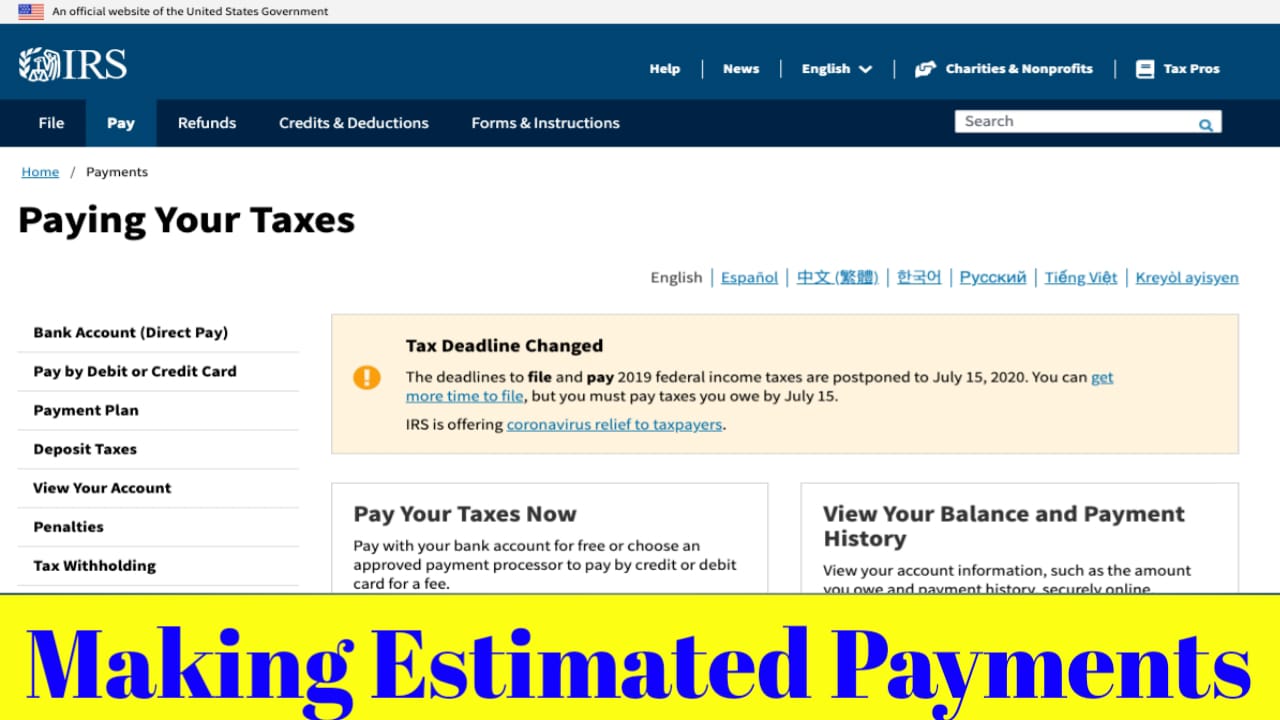
Making estimated payments is a critical responsibility for millions of taxpayers in the United States, especially self-employed individuals, freelancers, gig workers, and small business owners. As of January 2026, the Internal Revenue Service requires taxpayers who expect to owe $1,000 or more in federal tax after withholding and credits to make estimated tax payments during the year. These payments cover income tax, self-employment tax, and alternative minimum tax when applicable. Estimated payments are generally due four times a year, following IRS-set deadlines that typically fall in April, June, September, and January. Missing or underpaying these installments can result in penalties, even if a refund is due later.
Estimated taxes exist to ensure the government receives tax revenue throughout the year rather than in one lump sum at filing time. Unlike employees whose taxes are withheld from paychecks, many taxpayers must actively calculate and submit payments themselves.
Understanding how estimated payments work, who must pay them, and how to calculate the correct amount is essential for staying compliant in 2026.
What Are Estimated Tax Payments
Estimated tax payments are advance payments of federal taxes made on income that is not subject to automatic withholding. This includes income from self-employment, interest, dividends, rental income, and certain capital gains.
Making estimated payments helps taxpayers spread their tax burden evenly across the year while avoiding underpayment penalties.
Who Needs to Make Estimated Payments in 2026
You generally must make estimated payments if you expect to owe at least $1,000 in federal tax and your withholding does not cover your total tax liability. This applies to individuals, sole proprietors, partners, and S corporation shareholders.
Retirees, investors, and individuals with multiple income streams may also fall under estimated tax rules.
Estimated Tax Payment Schedule and Key Details
The table below outlines essential estimated payment details for the 2026 tax year:
| Category | Details |
|---|---|
| Minimum Tax Due | $1,000 after credits |
| Number of Payments | Four per year |
| Typical Due Dates | April, June, September, January |
| Income Covered | Self-employment, interest, dividends |
| Penalty Risk | Yes, for underpayment |
| Safe Harbor Rule | 90% of current tax or 100% of prior year |
| Applies To | Individuals and businesses |
| Adjustment Allowed | Yes, if income changes |
READ ALSO-
Understanding these basics helps taxpayers plan accurately.
How to Calculate Estimated Payments
To calculate estimated payments, taxpayers estimate their total income for the year, subtract deductions and credits, and calculate the expected tax. This amount is then divided into four equal payments unless income is uneven throughout the year.
Taxpayers can adjust payments if income changes significantly during the year to prevent overpayment or penalties.
Safe Harbor Rules Explained
The IRS offers safe harbor rules to protect taxpayers from penalties. You generally avoid penalties if you pay:
- At least 90% of your current year’s tax
- Or 100% of your previous year’s tax liability
High-income taxpayers may be required to pay a higher percentage based on prior-year income.
How to Make Estimated Payments
Estimated payments can be made electronically, by phone, or by mail using official payment vouchers. Electronic methods are faster, more secure, and provide immediate confirmation.
Taxpayers should keep records of all payments for tax filing and audit purposes.
Common Mistakes When Making Estimated Payments
One common error is underestimating income, especially for freelancers with fluctuating earnings. Another mistake is missing deadlines, which can trigger penalties even if the total tax is eventually paid.
Reviewing income regularly and adjusting payments can prevent these issues.
Frequently Asked Questions (FAQs)
1. What happens if I miss an estimated tax payment?
You may owe an underpayment penalty and interest.
2. Can I change my estimated payment amounts during the year?
Yes, payments can be adjusted if income increases or decreases.
3. Do estimated payments apply to state taxes as well?
Many states have similar rules, but requirements vary by state.
Conclusion
Making estimated payments in 2026 is essential for taxpayers with income not subject to withholding. By understanding who must pay, following the correct schedule, and using safe harbor rules, taxpayers can avoid penalties and manage their tax obligations more effectively. Staying proactive, reviewing income regularly, and keeping accurate records ensures a smoother tax season and better financial control throughout the year.