
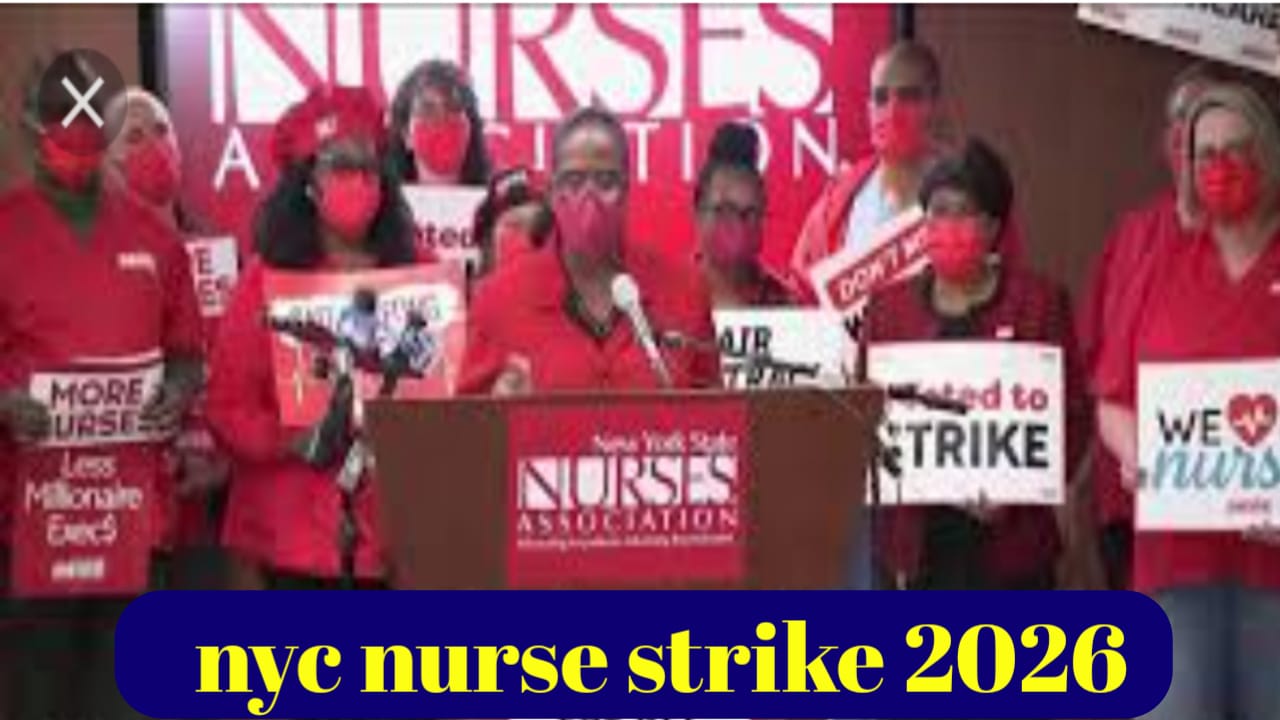
The NYC nurse strike 2026 became one of the most significant healthcare labor actions in New York City in recent years. In January 2026, thousands of unionized nurses across multiple NYC hospitals walked off the job after contract negotiations stalled. The strike was organized by the New York State Nurses Association (NYSNA) and centered on patient safety, chronic understaffing, mandatory overtime, and fair compensation. Hospital systems responded by activating emergency staffing plans, while city and state officials monitored the situation closely due to its impact on patient care. The walkout drew wide public attention because it affected major hospitals and highlighted long-standing workforce pressures in New York’s healthcare system.
NYC Nurse Strike 2026
Beyond the immediate disruption, the strike reflected deeper structural challenges facing nurses in NYC. Rising patient volumes, post-pandemic burnout, and inflation-driven cost pressures have strained both staff and hospital budgets. Nurses argued that unsafe staffing ratios were putting patients at risk, while hospital administrators cited financial constraints and operational complexity.
As negotiations continued, the NYC nurse strike sparked citywide conversations about healthcare funding, labor rights, and patient safety standards. Understanding what led to the strike—and what it means for the future—is essential for patients, healthcare workers, and policymakers alike.
What Is the NYC Nurse Strike 2026?
The NYC nurse strike 2026 refers to a coordinated labor action in which union nurses temporarily stopped working at several New York City hospitals. The strike followed months of unsuccessful contract talks between NYSNA and hospital management. Nurses stated that they were left with no alternative after repeated warnings about unsafe conditions went unanswered.
This was not a symbolic protest. Picket lines formed outside hospital campuses, elective procedures were postponed, and hospitals relied on contingency staffing to maintain emergency services.
Key Hospitals and Scope of the Strike
The strike involved multiple NYC hospitals, particularly large facilities employing unionized nursing staff. While emergency rooms remained open, hospitals limited non-urgent care and reassigned resources to critical units.
Strike Snapshot (Overview)
| Aspect | Details |
|---|---|
| Time period | January 2026 |
| Union involved | New York State Nurses Association |
| Estimated nurses | Thousands |
| Main issue | Staffing ratios and patient safety |
| Wage concerns | Pay adjustments and inflation |
| Overtime | Mandatory overtime limits |
| Hospital response | Emergency staffing plans |
| Public impact | Delayed non-emergency care |
READ ALSO-
Why Did Nurses Go on Strike in NYC?
Nurses cited several interconnected reasons for the NYC nurse strike:
- Chronic understaffing that increased nurse-to-patient ratios beyond safe limits
- Burnout and mental health stress after years of high-pressure work
They also raised concerns about wages not keeping pace with the cost of living in New York City. According to union statements, these conditions affected both nurse retention and patient outcomes.
How Hospitals and the City Responded
Hospitals activated contingency measures, including temporary staff and adjusted schedules, to keep essential services running. City officials emphasized that emergency and life-saving care would continue throughout the strike.
At the same time, pressure mounted on hospital administrations to return to the negotiating table. Public demonstrations and community support amplified the nurses’ demands, keeping the NYC healthcare strike in the spotlight.
Impact on Patients and Healthcare Services
For patients, the most visible impact was the delay of elective procedures and longer wait times in some departments. Emergency care, intensive care units, and maternity services remained operational, though often under modified staffing plans.
While hospitals assured the public that patient safety was prioritized, the strike underscored how dependent the healthcare system is on experienced nursing staff.
Negotiations and Current Status (2026 Update)
As of early 2026, negotiations continued between NYSNA and hospital representatives. Both sides signaled willingness to reach an agreement, but nurses insisted that any contract must include enforceable staffing standards.
The NYC nurse strike 2026 may end with a new labor agreement, but its effects are likely to influence future healthcare labor talks across New York State.
What This Means for the Future of NYC Healthcare
The strike has broader implications beyond one contract cycle. It has renewed calls for statewide staffing regulations, better workforce planning, and sustainable healthcare funding models.
Many experts believe the outcome will shape how hospitals recruit and retain nurses in a competitive labor market.
FAQs
Q1. When did the NYC nurse strike 2026 begin?
It began in January 2026 after contract negotiations failed between nurses and hospital management.
Q2. Were hospitals completely closed during the strike?
No. Emergency and critical care services continued, while many non-urgent procedures were postponed.
Q3. Who organized the NYC nurse strike?
The strike was organized by the New York State Nurses Association, representing unionized nurses.
Conclusion
The NYC nurse strike 2026 was more than a labor dispute—it was a turning point in the conversation about patient safety and working conditions in New York City hospitals. By drawing attention to staffing shortages and workplace pressures, nurses forced healthcare leaders and policymakers to confront long-standing issues. Whether through new contracts or future reforms, the lessons from this strike will shape NYC healthcare for years to come.