
The Rare State Quarters Value Chart has become a must-have guide for collectors and everyday coin holders who want to know if their spare change is worth more than face value. The U.S. Mint released the 50 State Quarters Program between 1999 and 2008, producing billions of coins, yet a small number carry significant premiums today. Based on verified numismatic data available through early 2026, certain state quarters can be worth $10, $100, or even over $1,000, depending on condition, mint mark, and errors. Official information about minting years, designs, and mintage figures comes from the U.S. Mint, while collector values are driven by market demand.
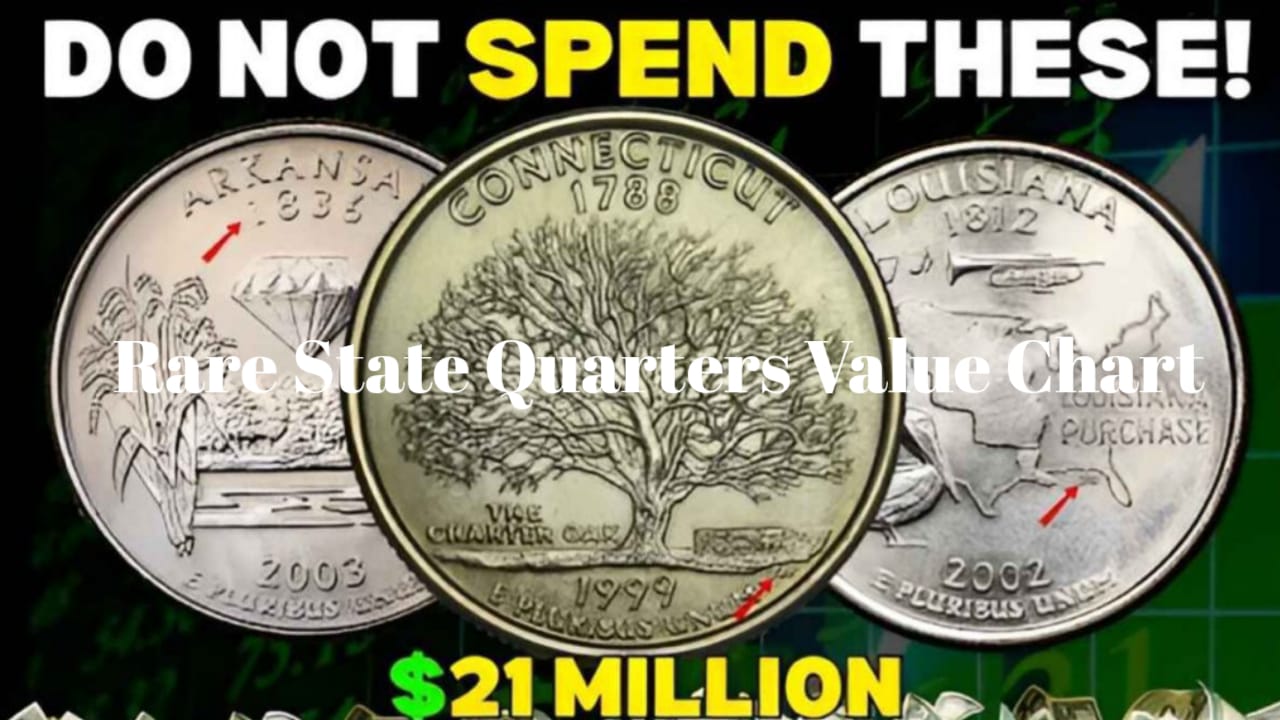
Rare State Quarters Value Chart
Many people assume state quarters are common and worthless, but that is not always true. Rare minting errors, low-mintage issues, and high-grade coins certified by grading agencies have changed the value landscape dramatically.
This guide explains the most valuable state quarters, why they are rare, and how to use a state quarters value chart to estimate what your coins may be worth today.
What Makes a State Quarter Rare and Valuable
Not all state quarters are rare. Value depends on factors such as mint errors, limited production numbers, condition, and collector demand. Coins graded MS67 or higher often command the strongest prices.
Rare State Quarters Value Chart (High-Value Examples)
Below is a rare state quarters value chart highlighting well-known valuable issues based on collector demand and verified auction trends.
| State & Year | Mint Mark | Key Feature | Estimated Value Range |
|---|---|---|---|
| Delaware 1999 | P | Spitting Horse error | $20 – $500 |
| Wisconsin 2004 | D | Extra Leaf (High) | $50 – $400 |
| Wisconsin 2004 | D | Extra Leaf (Low) | $40 – $300 |
| Minnesota 2005 | P | Doubled Die error | $30 – $250 |
| Kansas 2005 | P | “In God We Rust” error | $10 – $100 |
| Georgia 1999 | P | High-grade MS68 | $100 – $1,000+ |
| Connecticut 1999 | P | High-grade MS68 | $120 – $1,500 |
| South Dakota 2006 | P | Low mintage, top grade | $80 – $600 |
ALSO READ-
Most Valuable State Quarters Errors Explained
Mint errors are one of the biggest drivers of value. These errors occurred during production and were never intended for circulation.
- Extra design elements, missing letters, or doubled images can dramatically increase a coin’s worth.
- Error coins in uncirculated condition are especially valuable to collectors.
High-Grade State Quarters and Collector Demand
Condition plays a huge role in pricing. A common quarter in average circulated condition is usually worth face value. However, the same coin graded MS67 or MS68 can be worth hundreds or more. Professional grading confirms authenticity and preserves long-term value.
How to Identify Rare State Quarters in Your Collection
Collectors should examine quarters closely under good lighting. Look for unusual marks, doubling, or design flaws. Checking the mint mark and year is essential, as some combinations are far more desirable than others.
Are State Quarters Still Worth Collecting in 2026?
Yes. Interest in valuable state quarters remains strong in 2026. New collectors continue to enter the hobby, and demand for top-condition and error coins remains steady. While not every quarter is valuable, select examples continue to outperform expectations.
Tips for Protecting and Selling Valuable State Quarters
Proper storage prevents damage and protects value. Selling through reputable dealers or certified auctions often yields better prices than casual sales.
Frequently Asked Questions
Q1. Are all 50 State Quarters valuable?
No. Most are worth face value unless they have errors or are in very high condition.
Q2. What is the most valuable state quarter?
High-grade 1999 issues and rare error coins can exceed $1,000.
Q3. Should I get my state quarter graded?
Yes, if it appears uncirculated or has a visible mint error.
Conclusion
The Rare State Quarters Value Chart shows that hidden treasures can still be found in everyday change. While most state quarters are common, select error coins and high-grade examples can be surprisingly valuable in 2026. Understanding mint marks, condition, and rarity is key to identifying worthwhile pieces. With careful inspection and proper storage, state quarters remain an accessible and rewarding area of coin collecting for beginners and experienced collectors alike.