
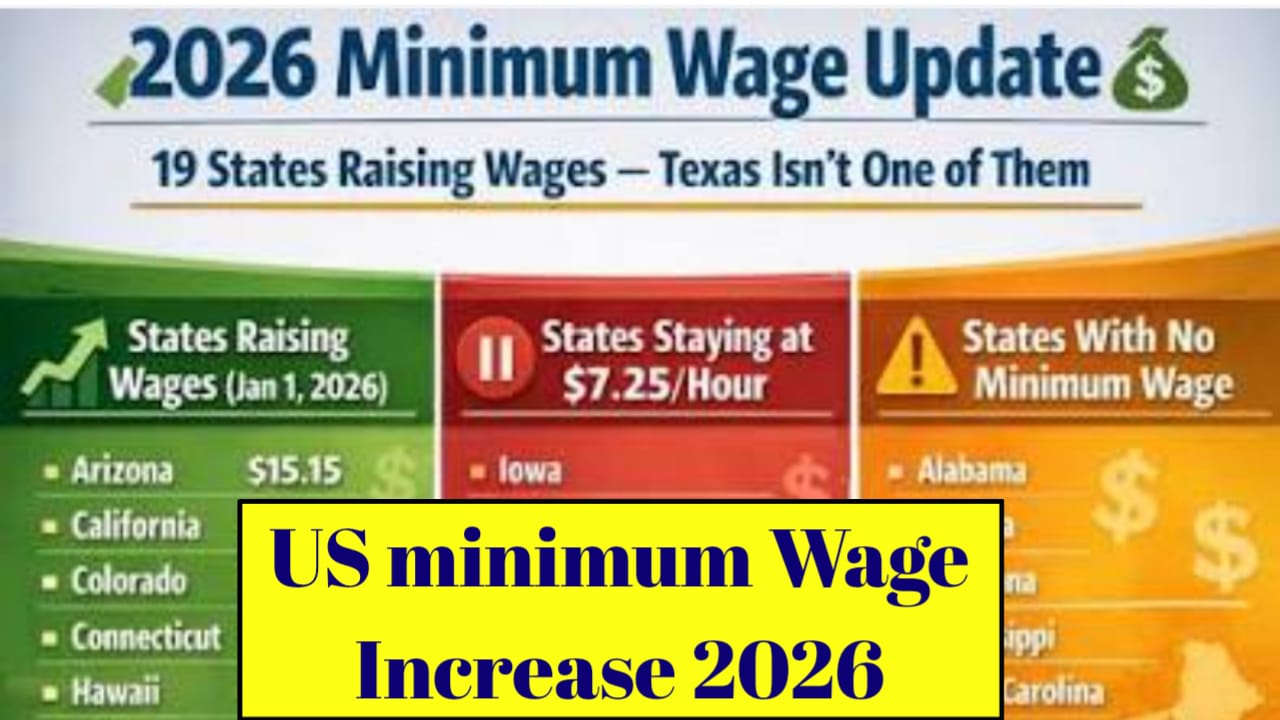
The US minimum wage increase 2026 officially took effect on January 1, 2026, bringing higher hourly pay to millions of workers across the country. While the federal minimum wage remains $7.25 per hour, unchanged since 2009, nearly 20 states implemented automatic or legislated wage hikes at the start of the new year. According to the most recent labor data, these increases impact more than 8 million workers, with some states now offering minimum wages above $17 per hour. The changes are based on inflation adjustments, voter-approved laws, and long-term wage schedules already written into state legislation, making 2026 one of the most significant years for state-level wage growth in the U.S.
US Minimum Wage Increase 2026
Unlike federal policy, which has seen no update in over a decade, state governments continue to respond to rising living costs, housing prices, and inflation pressures. Many of the 2026 increases were triggered automatically through cost-of-living formulas tied to consumer price data, ensuring wages rise when expenses increase.
For employees, higher minimum wages mean improved earning potential and better financial stability. For employers, especially small businesses, the changes require updated payroll systems and careful budgeting. Understanding how the minimum wage increase in 2026 works at the state level is essential for compliance and financial planning.
Why the US Minimum Wage Increase 2026 Matters
The minimum wage sets the foundation for worker pay across multiple industries, including retail, hospitality, healthcare support, and food services. With inflation remaining a major concern, states are using wage adjustments to protect purchasing power for low-income workers.
Although there is no nationwide increase, the growing gap between the federal rate and state minimum wages highlights a shift toward localized wage policies. States with higher costs of living are leading the movement, setting wage floors that better reflect regional economic realities.
States Implementing Minimum Wage Increases in 2026
Below is a table showing state minimum wage rates for 2026 based on verified labor data. These rates generally became effective on January 1, 2026.
| State | 2026 Minimum Wage | Notes |
|---|---|---|
| Arizona | $15.15 | Annual inflation adjustment |
| California | $16.90 | One of the highest statewide rates |
| Colorado | $15.16 | Cost-of-living increase |
| Connecticut | $16.94 | Indexed to inflation |
| Hawaii | $16.00 | Continued scheduled increases |
| Maine | $15.10 | Annual adjustment |
| Michigan | $13.73 | On track to reach $15 by 2027 |
| Minnesota | $11.41 | Inflation-based increase |
| Missouri | $15.00 | Major milestone for the state |
| Nebraska | $15.00 | Voter-approved increase |
| New Jersey | $15.92 | Applies to large employers |
| New York | $16–$17 | Higher rate in major metro areas |
| Rhode Island | $16.00 | Gradual wage growth plan |
| Washington | $17.13 | Highest statewide minimum wage |
ALSO READ-
Some cities and counties may have higher local minimum wages.
Key Drivers Behind the 2026 Minimum Wage Increase
Several factors contributed to the US minimum wage increase 2026:
- Rising inflation and higher costs for housing, food, and transportation
- State laws requiring automatic annual wage adjustments
- Long-term wage schedules passed through legislation or ballot initiatives
These drivers ensure that wages rise steadily rather than stagnating during periods of economic change.
Impact on Workers in 2026
For workers, higher minimum wages directly translate into increased annual earnings. A $1 to $2 hourly increase can add thousands of dollars per year for full-time employees. This extra income helps cover essential expenses and reduces reliance on debt or assistance programs.
Higher wages may also improve job retention and employee morale, particularly in industries with historically high turnover rates.
Impact on Employers and Businesses
Employers must adapt to the minimum wage increase 2026 by reviewing payroll systems, updating labor budgets, and ensuring compliance with state and local laws.
Key considerations include:
- Adjusting wage structures for existing employees
- Updating pricing or staffing strategies to manage higher labor costs
While challenges exist, many businesses report benefits such as reduced turnover and improved productivity when wages increase.
Frequently Asked Questions (FAQs)
1. Did the federal minimum wage increase in 2026?
No. The federal minimum wage remains $7.25 per hour in 2026.
2. Why do state minimum wages differ from the federal rate?
States can set higher minimum wages based on local economic conditions, cost of living, and state laws.
3. Are all workers covered by the new minimum wage?
Most workers are covered, but some exceptions may apply for tipped employees, trainees, or specific industries depending on state law.
Conclusion
The US minimum wage increase 2026 reflects a continued shift toward state-led wage policy in response to inflation and rising living costs. While federal wages remain unchanged, millions of workers are benefiting from higher state minimum wages, with some states reaching historic highs. For workers, these increases offer greater financial stability, and for employers, they underscore the importance of staying informed and compliant. As economic conditions evolve, state minimum wages are likely to remain a key tool in shaping the U.S. labor market.